

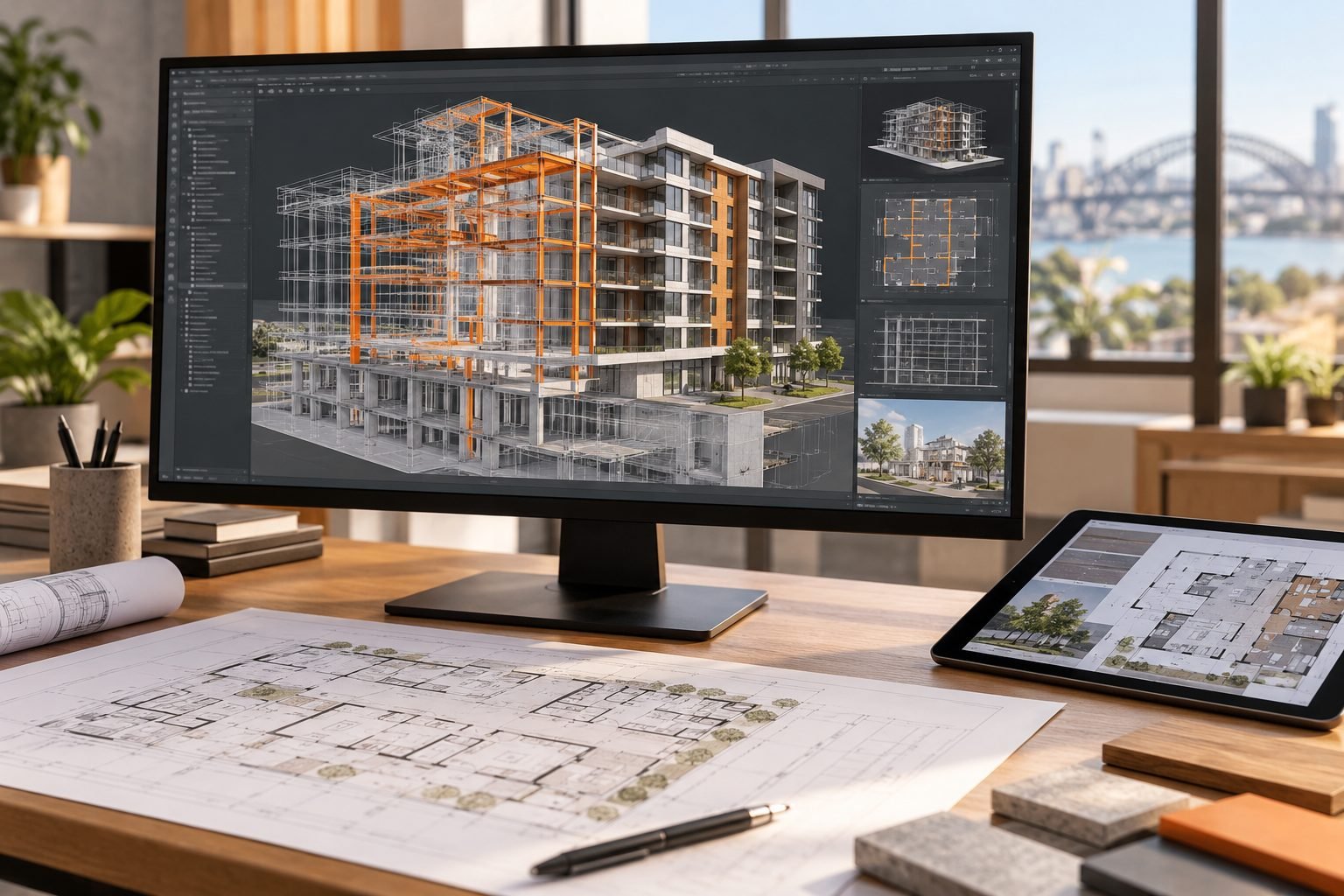
5D BIM adds cost to a 3D model of a project, so a quantity surveyor can show how a design change affects both price and programme.
Why 5D BIM matters to cost planning
BIM is short for building information modelling, and it has changed how some projects are designed and costed. When cost is added to the model as a fifth dimension, a 5D BIM quantity surveyor can tie every design decision to a price. In plain terms, it is a way of seeing what a change will cost before it is built.
BIM in plain terms
Think of BIM as a 3D model that holds information, not just shapes. A wall in a traditional drawing is a line, but a wall in a BIM model knows its height, thickness, material and finish.
4D adds time. The model links each element to the programme, so you can see what gets built when.
5D adds cost. Each element carries a rate, so the model can total the price as the design changes. That is the dimension a quantity surveyor works with most.
What a 5D BIM quantity surveyor does
The headline benefit of 5D is that quantities come straight from the model. When the design changes, the model can re-measure the areas, lengths and items automatically, instead of a QS re-taking off the drawings by hand.
That automatic quantity is a starting point, not the final answer. A model only measures what has been drawn and described, so a quantity surveyor still has to check that the right things are in it. Missing elements, wrong assumptions and items drawn once but built twice all have to be caught by a person who understands construction.
The QS also adds the things the model does not know, such as preliminaries, waste, temporary works and escalation. That is the difference between a raw model total and a realistic construction cost plan.
A facade change worked through
Imagine a project where the facade is changed from painted blockwork to a curtain wall late in design. In a traditional workflow, that triggers re-measurement of the external wall, a new facade price and a revised programme, all of which takes time.
In a 5D model, the change is made once and the effect flows through the same day. The new facade quantities appear, the cost updates against the rates, and the programme shows whether the longer lead time pushes the completion date. The owner and designer see the price and time effect together, which is far better than finding out weeks later.
Who benefits
Owners gain transparency and control. They can ask what an option costs and see the answer against the budget, rather than waiting for a report.
Designers benefit from clash detection. Because the model holds services, structure and architecture together, conflicts such as a pipe running through a beam are found in the model instead of on site.
Contractors face fewer surprises. When the documents are consistent and quantities are derived from the model, there is less guesswork at tender and fewer variations during construction.
Limits for small and medium projects
5D BIM is not automatically the right tool for every job. Its value depends heavily on model quality, and a model that has not been built to the right level of detail can produce misleading numbers.
Ownership matters too. Someone has to maintain the model, decide who can change it and keep the cost data current, which is real work.
For smaller projects, a traditional estimate is often still the better tool. When the design is simple and the risk is low, the effort of building and maintaining a 5D model can outweigh the benefit. The right approach is to match the tool to the project.
Frequently asked questions
Does 5D BIM replace a quantity surveyor?
No, it automates measurement but not judgement, and the model still has to be checked and completed. A 5D BIM quantity surveyor adds the rates, assumptions and items the model cannot see.
Is it worth it for a small job?
Often not. When the design is simple, a traditional estimate is usually faster and cheaper, so the model should earn its keep before you commit to it.
Who owns the model?
Ownership should be agreed before work starts. It affects who can change the data and who carries the cost of keeping it current.