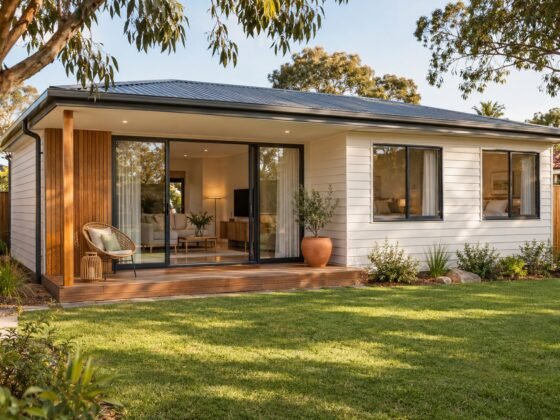



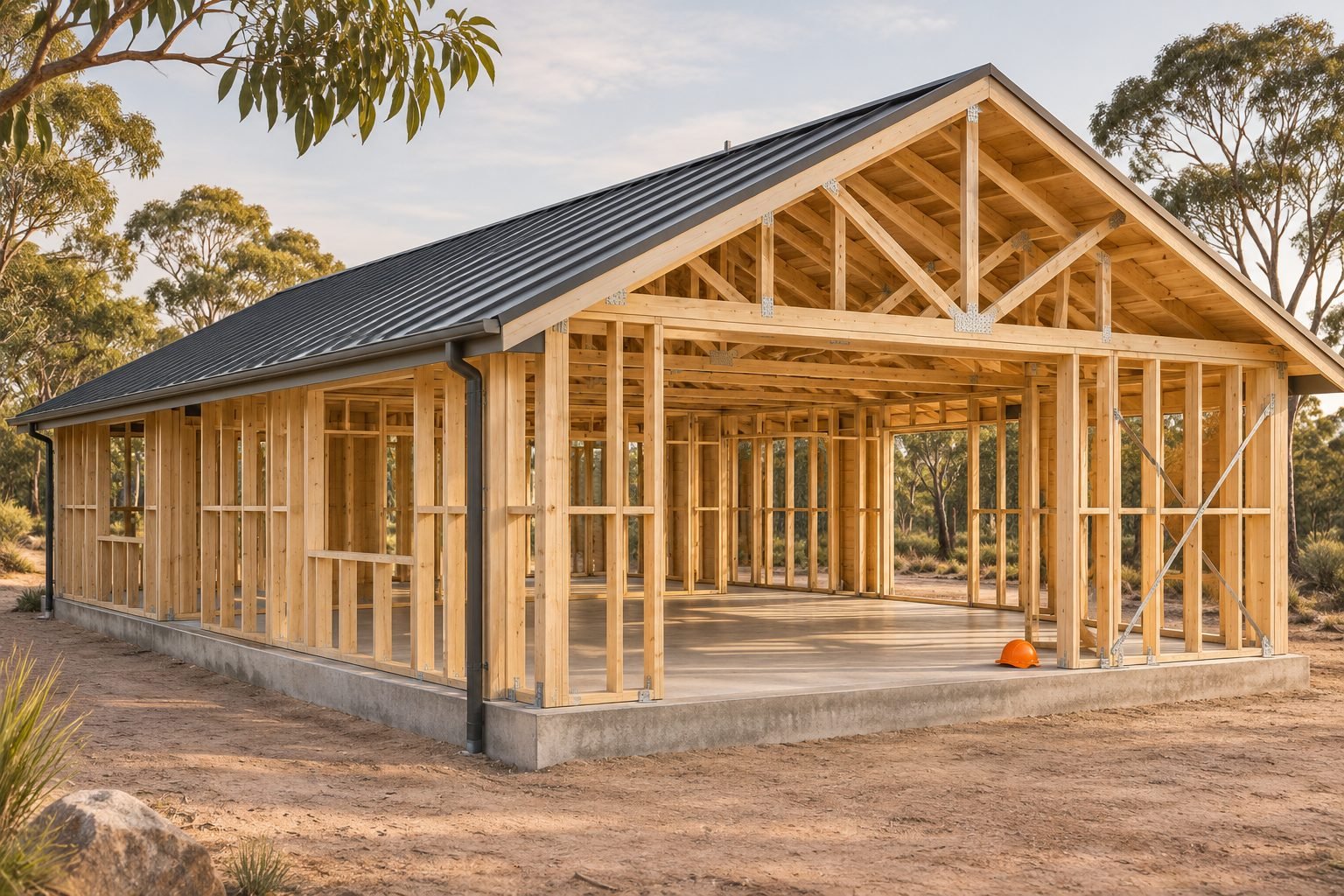
Capital works is the structure and fixed items of an investment property, and it can generally be claimed at 2.5 per cent a year over 40 years.
If you own an investment property, a capital works deduction lets you claim the construction cost of the building, and the things fixed to it, over time. In simple terms, capital works is the structure of the home: the walls, roof, floors, built-in cupboards, tiles, doors, windows, and the fixed plumbing and wiring that run through it.
For residential construction that started after 15 September 1987, the claim is generally 2.5 per cent a year over 40 years. It is often one of the larger deductions on a rental property, and it can apply whether you built the property yourself or bought it from someone else.
What counts as a capital works deduction?
Capital works is the part of the property that stays put. Think walls, roof, floors, built-in cupboards, tiles, doors and windows. Fixed plumbing and wiring are capital works too.
Plant and equipment is the other side, claimed under Division 40 rather than Division 43. These are the removable or mechanical items, like ovens, carpets, curtains and air conditioners. The two are treated differently, so it pays to know which is which.
Many items sit near the line, and the ATO’s rules and rulings decide which side they fall on. A quantity surveyor checks each one against the current rules.
Kitchen: what is capital works and what is not
A kitchen is the clearest place to see the split.
The built-in cupboards, benchtops, splashback tiles and sink are capital works. They are fixed to the structure and generally form part of the building.
The oven, cooktop, rangehood and dishwasher are plant and equipment. They can be removed and replaced, and they wear out on their own schedule.
Bathroom: where the line sits
In the bathroom, the tiles, vanity, toilet, basin, bath and shower screen are capital works. They are built into the room and are hard to remove without damaging the structure.
Exhaust fans and heated towel rails are plant and equipment. Hot water systems are plant and equipment as well.
Living areas and bedrooms
Walls, ceilings, built-in wardrobes, doors, windows and fixed timber floorboards are capital works. They are all part of the structure, or fixed to it.
Carpet, floating floors, blinds, curtains and split-system air conditioners are plant and equipment. If you can lift it, hang it or unplug it, it usually belongs on the Division 40 side.
For many investors who buy an established home, the plant and equipment already in it is second-hand and generally not claimable. That makes the capital works side of the schedule matter more. Ask your accountant how this affects your own position, and read up on common property depreciation myths before you assume what you can claim.
Outside: driveways, fences and retaining walls
Capital works does not stop at the front door. Driveways, fences and retaining walls are structural improvements, and they follow the capital works rules.
Where construction started after 26 February 1992, they generally follow the same 2.5 per cent a year over 40 years, counted from their own completion date. Check the ATO for edge cases.
A swimming pool is another structural improvement that follows the capital works rules. These are just a few division 43 examples, and a full schedule lists many more.
How the 2.5 per cent building write-off works
For residential construction that started after 15 September 1987, capital works is generally claimed at 2.5 per cent a year over 40 years, counted from completion.
The 40 years runs from the completion of each piece of work, not from one single date for the whole property. A property can therefore have several capital works items, each with its own start date and its own remaining years.
Here is how it plays out. Take a house built in 2005, with a kitchen renovated by a previous owner in 2015 and a new fence in 2020. That is three separate capital works items, each with its own 40-year period counted from its completion. You claim for the years left on each item while the property is rented or available for rent. Where the previous owner’s costs are unknown, a quantity surveyor can estimate them.
You can only claim for the periods the property is used, or available, to produce income. Capital works deductions generally reduce the cost base for capital gains tax later on, so leave that calculation to your accountant.
Renovations and older properties
Renovations can qualify too, whether you did them or a previous owner did. Once the cost of the work is known or estimated, it is generally claimed over its own 40-year period, for the years the property is rented or available for rent.
Original construction from before 16 September 1987 generally has no capital works claim left, but later renovations can still qualify. If you own an older property, read more about depreciation on a property built before 1987.
Where construction costs are unknown, the ATO accepts an estimate by an appropriately qualified person such as a quantity surveyor. Real estate agents, valuers and accountants are generally not qualified for this unless they have construction costing qualifications.
Because so many items sit near the line, every schedule is prepared by a Certified Quantity Surveyor. We inspect the property by photos and video, with a site visit where needed, and set out every capital works item and its remaining write-off period. A standard residential schedule is $600 including GST, delivered in 3 to 5 business days Australia-wide, with a free eligibility check first.
For the bigger picture, start with the complete guide to investment property depreciation. When you are ready, a depreciation schedule is the practical way to set out what you can claim as a capital works deduction.
Frequently asked questions
What is the difference between capital works and plant and equipment?
Capital works is the structure and fixed items, claimed under Division 43. Plant and equipment is the removable and mechanical items, claimed under Division 40. For many investors who buy an established home, the plant and equipment already in it is second-hand and generally not claimable, so ask your accountant.
Can I claim capital works on a property built before 1987?
Original construction from before 16 September 1987 generally has no capital works claim left, but later renovations by you or a previous owner can still qualify.
Do I need a quantity surveyor to claim capital works?
Where construction costs are unknown, the ATO accepts an estimate by an appropriately qualified person such as a quantity surveyor, so it is usually the practical way to get the figure right.