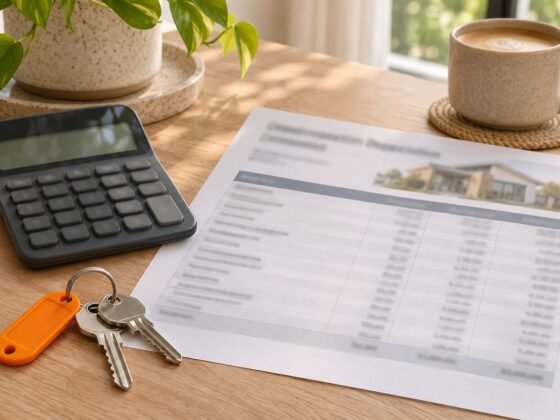




A property tax depreciation schedule records the yearly deductions you can claim for your building and its fittings, prepared by a quantity surveyor.
What a property tax depreciation schedule is
A property tax depreciation schedule is the document that turns the slow loss of value in your investment property into a yearly tax deduction. In plain terms, the building and the things fixed inside it wear out over time, and the ATO lets investors claim that wear and tear against their rental income. A quantity surveyor measures and records it so your accountant has the numbers ready.
Depreciation splits into two parts. The building itself, the walls, roof, slab and fixed services, falls under Division 43 and is called capital works. The removable fittings and equipment, such as carpet, air conditioners and hot water systems, fall under Division 40 and are called plant and equipment.
What the document contains
A property tax depreciation schedule is a working document your accountant uses every year. It lists every depreciable asset, what it is worth and how much you can claim in each future year.
It runs for 40 years. The capital works allowance on a residential property is normally claimed at 2.5 per cent a year over that period, so one schedule can cover you for decades.
It shows both methods for plant and equipment. The diminishing value method claims more early and less later, while the prime cost method spreads the claim evenly over each item’s life. We provide both so your accountant can choose what suits you.
The page your accountant uses most is the yearly summary. It totals the claim for each financial year, which makes the tax return quick to prepare.
Who can claim
The short answer is most owners of income-producing property, but the details depend on what you own and when.
New properties carry both halves of depreciation, capital works and plant and equipment. An established property also carries capital works on the building itself, but the rules for plant and equipment changed for second-hand items acquired after 9 May 2017. In many cases you can no longer claim plant and equipment that was already in the property when you bought it, so the schedule focuses on what still applies.
Renovations work too. Capital works on a renovation is depreciable in the same way as the original building, and any new plant and equipment you install is claimable.
If you turned your own home into a rental, you may be able to claim from the time it became income-producing. The schedule is built around the relevant start date, so check the current rules with your accountant for your own situation.
How the process works
The process is simple and takes days, not weeks. You order the schedule and we first run an eligibility check so you know whether it is worth doing before you pay.
Once it is confirmed, we send the invoice and collect the details we need. The property is inspected by photos and video, with a site visit where needed. A Certified Quantity Surveyor then measures the building and fittings and prepares the schedule.
The finished report is delivered to you and your accountant, usually in three to five business days. It arrives as a PDF you can keep and reuse.
A worked example
Picture a three-bedroom house built in 2015 and bought new for $650,000. Because it was built after 1987 and bought new rather than second-hand, it would normally carry both capital works on the building and plant and equipment on the fittings.
The capital works allowance runs at a flat rate over the full 40 years, so it keeps producing a claim year after year. The plant side, things like the cooktop, carpet and air conditioner, has its own effective life for each item and often produces a larger claim in the first few years.
We deliberately do not promise a dollar figure here, because the result depends on your purchase, the fit-out and your circumstances. What the schedule does is give your accountant the correct numbers, and they work out how much that means for your own tax position.
Frequently asked questions
Is the inspection done on site?
The property is inspected by photos and video, with a site visit where needed. This keeps the process quick and the price fixed.
Who prepares the schedule?
A property tax depreciation schedule is prepared by a Certified Quantity Surveyor. They are the professionals recognised to measure construction cost, which is what the capital works figure is built on.
How long does the schedule last?
It is set up for the full 40-year capital works period. Once prepared, your accountant can use the same document year after year.